On late starts, the visibility gap, and why human connection beats algorithms
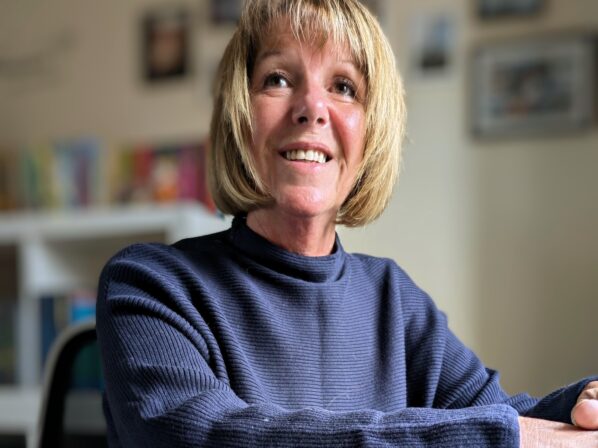
Paulette Dowle is a debut children’s book author who came to writing later in life and has found the experience of publication full of surprises, and not all of them welcome. We spoke to her about her journey to getting published, life as an independent author, and what she thinks the children’s publishing world could do better.
I’d love to hear how you ended up writing for children. What set you on this path?
I’ve always believed that imagination is where stories begin. As a child, my imagination was boundless. I was forever filling notebooks with stories, convinced that one day I would become a writer. Yet somewhere along the way, that dream became quieter. Whether it was a lack of confidence or the feeling that my stories didn’t quite fit into the traditional world of princesses, castles and fairy-tale endings, I convinced myself there wasn’t a place for my voice.
But stories have a remarkable way of finding us again. I realised I wasn’t drawn to the polished heroes or perfect kingdoms. My heart belonged to the forgotten characters, the ones hiding beneath bridges, lingering in the shadows, waiting for someone to wonder who they really were. I wanted to give those characters a voice because I’ve always believed that the most meaningful stories are often found in the places we least expect. That’s how my trolls were born: not as villains, but reinvented as characters with hearts, humour and story of their own to tell.
The final piece of the puzzle arrived with my grandchildren. Sitting beside them, watching their faces light up as a story unfolded, I was reminded that books are far more than words on a page, they are invitations to imagine, to question, to laugh, to feel and to see the world through kinder eyes. In those precious moments, I realised I had something different to offer.
Writing for children has become more than fulfilling a childhood dream. It’s an opportunity to celebrate the overlooked, to nurture curiosity and compassion, and to remind young readers that there is beauty in being different. My hope is that once my book has been read, the reader will believe that even the most unexpected character deserves to be seen, heard and loved.
Can you describe the route to the publication of your first book?
The journey to publishing my first book was a long one, and at times it felt truly impossible. There were so many moments when it would have been easier to just give up. I didn’t have an agent opening doors for me, I hadn’t studied at university, and I certainly wasn’t a household name. I was simply someone with a story in my heart that refused to let go.
I poured everything I had into that dream. Every spare moment was spent polishing my manuscript, sending it out, hoping that someone, somewhere, would believe in it as much as I did. There were disappointments, rejections and long periods of silence, but I couldn’t walk away. The story mattered too much.
Then, one day, everything changed. Meeting the incredibly talented illustrator Tim Brunt was a defining moment. Seeing my words transformed into beautiful illustrations was deeply emotional. The characters I had carried in my imagination for so long suddenly had faces, personalities and a life beyond the pages I’d written. It felt as though the story had finally come home.
A year later, our book was published. Holding that first copy in my hands is something I’ll never forget. It was years of hope, determination and quiet perseverance made real. It reminded me that dreams don’t have an expiry date, and that believing in yourself, even when the path feels uncertain, can lead to something truly extraordinary.
You’re very vocal about the fact that large publishers dominate the marketing space for children’s books, in bookstores and elsewhere. Were you surprised at how large the gap is in visibility between books by mainstream publishers and those by independent publishers?
I was surprised by just how wide the gap is, but more than anything, I was saddened by it. Independent publishers, and independent authors, produce some of the most original and heartfelt children’s books, yet they often struggle for visibility against the marketing power of major publishers and celebrity authors. I understand that publishing is a business, but every child deserves access to a diverse range of stories, not just the ones with the biggest promotional budgets.
I also believe publishing houses should be willing to take more chances on unknown authors, we don’t just belong in that “Slush pile.” Every bestselling writer was once an undiscovered voice, and the next great storyteller could be waiting for someone to simply say, “yes.”
I’m passionate about helping to change that narrative. I regularly approach bookshops and encourage them to consider independently published books, because I know there are so many wonderful stories that deserve a place on their shelves. Every independent author given a chance helps create a richer, more diverse landscape for young readers. At the end of the day, children don’t fall in love with marketing, they fall in love with stories. Great books deserve to be discovered, whoever publishes them.
We just published an article about how marketing is largely left up to writers these days, and how that might not be an ideal situation. How do you see this? And how have you experienced marketing your book? And what have you found to be most effective?
I wholeheartedly agree. One of the biggest misconceptions about publishing is that once your book is on the shelf, the hard work is done. In truth, that’s when a different journey begins. Today’s authors are expected to be marketers, publicists and social media personalities, often alongside simply trying to write the next book. I’ve found that posts featuring me receive far more attention than posts featuring my book alone, and I’ve always found that quite disheartening. The focus should be on the story, not the author. I’m not an influencer, I’m a writer.
I’m also not convinced that likes and shares translate into lasting readership. The moments that have truly made a difference have happened away from a screen, meeting readers in bookshops, or seeing a child’s face light up as they discover a character they love. That’s where books come alive.
Stories have connected people for generations, long before algorithms existed. I believe the most powerful form of marketing will always be genuine human connection. A recommendation or a review from someone who believes in your work, or a child excitedly telling a friend about a book they loved, those are the moments that build readers, and they’re worth far more than a viral post or likes.
What do you think isn’t discussed enough about the publishing world for children? (Apart from the above!)
I don’t think we talk enough about the importance of challenging stereotypes in children’s books. We’re raising a generation that believes in equality, yet so many stories still quietly reinforce traditional roles. I’d love to see more books where girls are the pirates, the firefighters, the footballers and even the monsters. Children shouldn’t grow up believing that adventure, bravery or mischief belong to one gender.
I’ve always admired authors like Babette Cole, who wasn’t afraid to turn expectations upside down. Her stories showed that children’s books can be funny, fearless and wonderfully unconventional, while still carrying an important message. As authors, we have the privilege of shaping how children see the world. The more we create stories that reflect possibility rather than limitation, the more we encourage every child to imagine themselves as the hero of their own story.
What are you working on at the moment?
It’s a really exciting time. Tim Brunt and I have our second children’s book coming out with Tiny Tree Publishing, and it’s a very different adventure from our first. I can’t give too much away just yet, but it follows an extraordinary inventor who creates something the world has never seen before. It’s a story about imagination, standing up for what you believe in, and daring to think differently. And, as always, Tim’s illustrations have taken the story to another level, I genuinely think they’ll leave readers speechless.
Alongside that, I also have a novella being published by Provoco Publishing, which will be released very soon. Writing for a different audience has been both challenging and rewarding, and I’m excited to share another side of my storytelling.
Whether I’m writing for children or adults, my greatest hope is always the same: to create stories that spark the imagination, stay with readers long after they’ve finished the final page, and perhaps inspire them to see the world a little differently.
Find Paulette on Instagram @lettiedwrites.