On publishing in a multilingual market, local stories, and the books children actually want
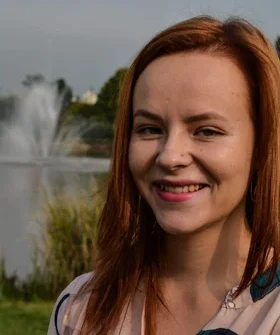
Shawna-Leze Meiring is Managing Editor of children’s books at Penguin Random House South Africa, one of the country’s leading publishers. Based in Cape Town, she oversees a children’s list spanning Afrikaans and English titles across picture books, chapter books, and young fiction. We spoke to Shawna-Leze about the structural differences between South African and international publishing, why international English titles dominate local bookshops, and what it actually means to write a distinctly South African children’s book.
Can you tell us a bit about your background and how you ended up working in children’s publishing?
I’m an only child and I had to entertain myself from a young age. I always had a book to keep my occupied (and to this day still do). It helped that my parents are readers as well and we would all happily sit and read in the evenings and over weekends. In high school, I learnt that the University of Pretoria had an undergraduate course for Publishing Studies and it became clear to me that you can have a job working with books one day. For my postgraduate studies, I continued my studies with a master’s degree in Afrikaans literature and I was very lucky to get a job straight when my studies finished end of 2018. It was at LAPA Publishers, which was bought by Penguin Random House South Africa in 2020. I would’ve been happy with any job in publishing, but I’m super grateful that I ended up working with children’s books. It brings me immense joy and creative fulfilment.
South Africa is very diverse in terms of languages and cultures. How does that shape the children’s publishing industry – and what does it mean for which books get made?
Historically, Afrikaans books are well positioned in the market due to the previous political regime’s agenda to establish Afrikaans as language. It ensured that Afrikaans publishing is still quite strong today. The problem with local English books is the dominance of international English books – they’re so prevalent in our bookshops and take up so much space in terms of marketing. I’d go so far as to say international English books cannibalise our local English titles. It’s quite a difficult structure to challenge.
For other local languages, like Zulu and Xhosa, there’ve been some attempts throughout the years to establish a reading market for speakers of the languages, but I think there’s a perception that it’s better to educate kids in English. So, unfortunately, that’s not very dominant (apart from some educational texts). Which books get made, therefore? The books that people will buy. That means, the middle class in Afrikaans buy Afrikaans books and the English middle class mostly buy international English books. The old adage of “support local” is still important!
How is the children’s book market different in South Africa from the UK or US?
There are two ways that publishing can be structured: In developed countries, trade publishing is the strongest sector, and in developing countries, educational publishing is the strongest sector. This setup influences publishing in the countries you’ve mentioned. In South Africa, we’re reliant on educational publishing (the publication of textbooks and handbooks) for the “health” of the general publishing sector. Our trade market is smaller, mainly I think because few people have disposable income for leisure reading. So, basically scale is a big difference. In the UK and USA, there are many books published for trade, but we publish on a smaller scale.
What makes a strong South African children’s book? Are there stories, characters, or settings that feel distinctly South African that you actively seek out?
I love the concept of “reading for fun”. I find children to be very perceptive, and they can usually sense a lesson in a story from far (so we steer clear, apart from if a genre asks for it, like a fable). I love books that have a strong story structure, good humour and relatable circumstances. Which I think is my answer to your questions about something being distinctly South African. It shouldn’t be forced; it should just be the story the author is telling because that is the world the author is observing. Generally, these books tend to be well-received, like Bianca Flanders’ Pumpkin books. Fanie Viljoen is another superstar. His oeuvre is so diverse and children like his stories very much, like Monsterrugby and Dreamers.
What trends are you seeing at the moment in children’s books? And what are you excited about on your publishing list?
Chapter books are quite popular (especially for children starting to read independently). And themes like dinosaurs and dogs always delight children!
And I’m excited about many books! Look out for two Afrikaans books in particular: Gunsteling by Keith Juluka in August and Silas en die ysbeer op Tafelberg by Annie Klopper en Zandré Coetzer (also to be released as a motion picture in local cinemas).
Find Shawna-Leze and the Penguin Random House South Africa children’s list at penguinrandomhouse.co.za.