On historical fiction, reinvention, and the realities of a writing career
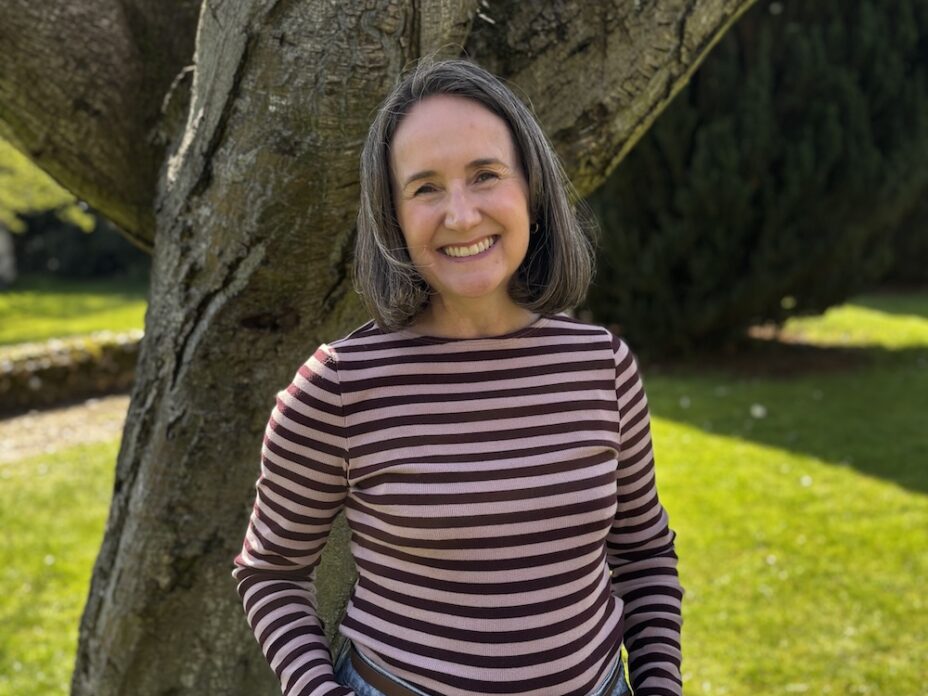
A.M. Howell is the bestselling author of seven middle grade historical mysteries, including The House of One Hundred Clocks, winner of the East Anglian Book Awards – the first time a children’s book had taken the prize. This autumn she takes a new direction with Stolen Things, her debut novel for adults, published by Fox and Ink. We spoke to Ann-Marie about marketing, artificial intelligence, and the realities of a writing career.
All your books (except for your upcoming one) are middle grade historical fiction. What keeps you coming back to historical settings?
I started off writing contemporary teen fiction, but it was my agent’s suggestion to pivot to another genre after my first three books didn’t get picked up by publishers. I’ve always loved reading historical fiction, and it felt natural to try writing it, but I was very scared of the amount of research and of being called out for getting facts wrong. Once I began though, I quickly fell in love with the genre and couldn’t imagine writing anything else. I think it’s a combination of the interesting research, and stepping into a different, sometimes gentler, time that keeps drawing me back. And not having to write about social media and phones is a bonus!
I’ve seen you say that your writing process has been different for your different books. Do you think you’re gradually making your way to the perfect approach – or is there no such thing?
I don’t think I’ll ever hit on the perfect approach, and I think I’ve tried most of them now. I’ve dived straight into writing with no clear idea of plot or characters, worked from a 5,000 word scene plan, and outlined chapters in Excel spreadsheets. The common thing about all of these methods is that I always get to the end, and that’s the most important thing. Now, I always map out the beginning, middle and end of a story before I start writing, but the method I use to get there will always vary.
You communicate on social media about your losses as well as your wins, and about the fact that it’s still not a given to get the next one published, even though you’re a bestselling author. Is that a common misconception? Did you expect this to be different yourself?
I think it’s very easy to see only the happy, successful side of a writing life on social media, and just like every side of life shown on there, this isn’t always the reality. If your first book gets you an agent and a book deal, then you are in the minority. If your book deal is for six figures you are even more of a minority!
I’d had three children’s books fail on submission to publishers before my debut The Garden of Lost Secrets sold to Usborne – and even though it sold in a two-way auction it wasn’t what was considered a big book deal or monetary advance. I still get asked why I’m still working (I’m a town planner in local government) now I’ve had seven books published, but the truth is I don’t earn anywhere near enough from writing alone to pay the bills. But what being published has done is allow me to work part-time which is lovely. I find the balance of being in a social office environment and then writing at home works well for me. I hope I can continue this as long as my books are being published.
Is there anything you wish the writing community talked about more honestly?
The need to continually adapt as a writer. It’s a fairly common experience for an author to be dropped by a publisher if their book doesn’t do well, or if the genre they write in is no longer flavour of the month. Historical fiction for children isn’t selling well right now, so I’m having to pivot and adapt and constantly think ahead to what I’ll be writing next. The advantage to this is it does keep it fresh and fun!
Marketing falls increasingly on authors these days. How have you found that side of things?
I should firstly say my experience of marketing is from the angle of being traditionally published. When I got my first book deal in 2018, I was riddled with anxiety about what would be expected of me, but I was fortunate that my publisher had a small marketing team who eased me into it. If you are writing for children, one of the most important ways to build your career is through school visits, and my publisher initially arranged these for me as part of my contract. I set up my own website and provided details of what events I offered, then added photos and testimonials after I had a few events under my belt. I found standing in front of 400 children in a school hall terrifying at first, but I made my author presentation fun and interactive, and that really helped.
AI developments are generating some anxiety in children’s publishing – and amongst writers in general. How are you experiencing that conversation, and where do you stand on it?
I find the rise and impact of AI on creative industries wholly depressing. When I began writing in 2015, I don’t think I’d even heard of AI. I learned last year that some of my books have been illegally used to train AI, which makes me very angry. My books are not written using AI – where would the fun be in that. Books written using AI will never be as clever, funny, original and inspiring as a book written by a human. I just hope the publishing industry as a whole takes a strong stand on the use of AI and agrees.
Your first novel for adults, Stolen Things, is out this November. What made now the right time for a shift in gear? And how different has the process been from writing for a younger audience?
In 2023, I was almost out of contract for my Mysteries at Sea series and I was working out what to do next. I had an urge to try writing for adults but wasn’t sure if I could do it. Writing 80,000 words somehow seemed so much more daunting than a 50,000 word children’s book! But I did have an idea for a historical thriller and my agent liked it, so I set to work. It was challenging, and I did a lot of research – the book is set just after the Great War in 1919 – but I had the best time writing it. I was very lucky the book found a good home with Fox and Ink, who are a small independent publisher in the north-west of England. They have been brilliant to work with, and I’m very nervous and excited for people to read it!
Find Ann-Marie on Instagram @amhowellwrites and at amhowell.co.uk. Stolen Things is published by Fox & Ink on 5 November 2026.